|
It manufactures a production line for zipper sliders.
The zipper slider factory is responsible for producing sliders, which are the metal parts responsible for opening and closing the zipper when they are slid over the teeth.
Slider Production Capacity
Monthly Production: Average monthly production (working 26 days in 24 hours): 4,680,000 pieces (assembled head + body).
Daily Production: Average production per day: 180,000 pieces.
Hourly Production: Average production per hour: 7,500 pieces.
Injection Machine: Head Production: Injection speed per minute (configuration of 8 to 10 injections): 1 minute X 10 injections X 10 heads = 100 heads per minute.
Production of Bodies: Injection speed per minute (10 to 12 injections configuration): 1 minute X 12 injections X 16 bodies = 192 bodies per minute.
Summary of Maximum Production Capacity: Monthly production: Up to 4,680,000 pieces, considering 26 days of operation in 24-hour shifts.
Daily production: Up to 180,000 pieces.
Production per hour: Up to 7,500 pieces.
These numbers reflect the ideal capacity of the machines, considering continuous operation and process efficiency.
Main Product: Zipper Slider The slider is the sliding part that opens and closes the zipper teeth.
It can be manufactured in different materials and shapes, depending on the type of zipper and the application.
Types of Sliders Produced: Metallic: Made of zinc alloy, brass or aluminum.
Automatic or Fixed: With or without a lock to prevent the zipper from opening by itself.
Customized: Sliders with logos, special shapes or different colors.
Zipper Slider Manufacturing Process.
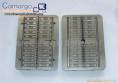
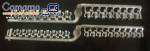
Part Injection The injection mold is used, where the molten zamac is injected into the slider shape.
Deburring and Finishing The injected parts may contain excess material, which is removed with deburring and sanding machines.
This ensures that the slider is smooth and flawless.
Puller Assembly and Fitting (Body) Some factories also assemble the puller (the handle you pull to move the slider).
This can be done manually or with fitting machines.
Surface Treatment (Galvanization/Painting)
Metal sliders undergo galvanization (nickel, brass, bronze or other coatings) to prevent rust and improve aesthetics.
Sliders can also be painted before assembly.
Quality Tests Checking the slide on the zipper track.
Resistance test (if the slider does not break or come loose under pressure).
Checking the finish and correct fit on the track.
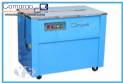
Packaging and Shipping After approval, the sliders are counted, packaged and sent to manufacturers of clothing, suitcases, bags and other products that use zippers.
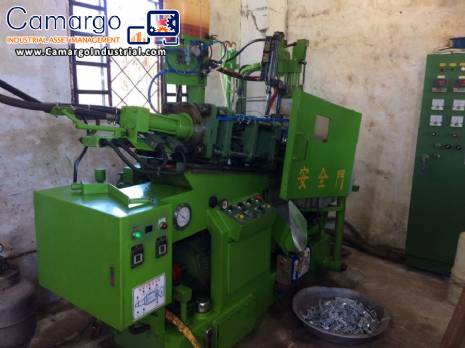
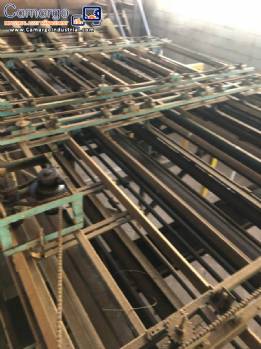
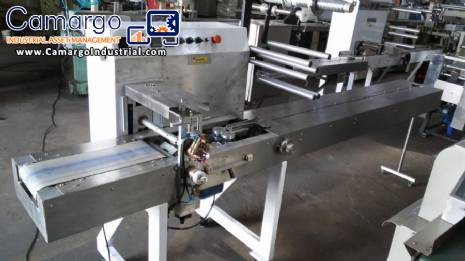
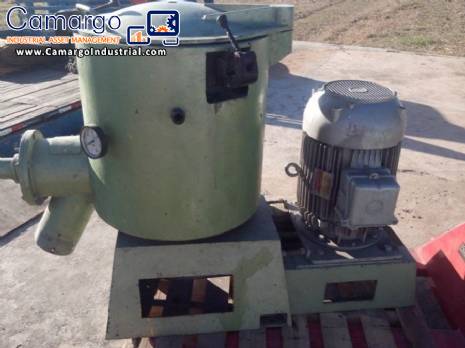
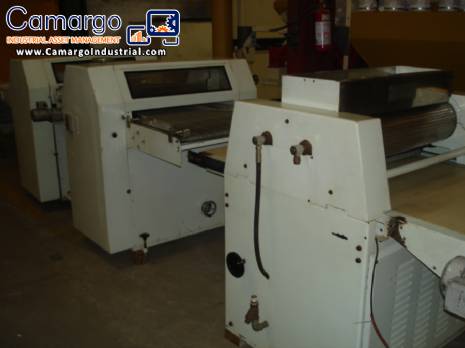
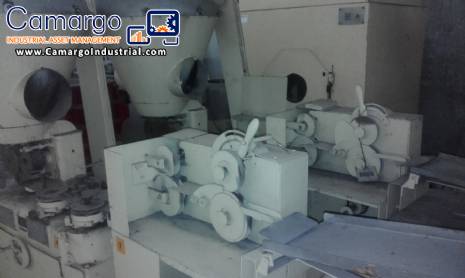
The main machines are: Made in Taiwan
Maximum Production Capacity (24 hours of operation, 26 days/month): The factory has the capacity to produce up to 4,680,000 sliders per month, considering production in line with the maximum capacity of the machines, the available labor and the necessary inputs.
We can achieve efficiency levels of up to 90%, considering the time required for scheduled stops, such as changing molds, cleaning the machines and operational adjustments.
This level of efficiency ensures that production is optimized and market demand is adequately met.
Minimum Production Capacity (1 8-hour shift, 26 days/month): In cases of limited inputs or other external factors, if the factory operates in only 1 8-hour shift per day, production can produce approximately 1,560,000 sliders per month.
All machines that make up the production line are equipped with identification and signaling plates, ensuring compliance with industrial safety standards. In addition, the injection machines have safety doors and protection systems, ensuring a safe work environment for operators.
There is the possibility of adaptation according to the investor's needs. If necessary, it is possible to change molds to inject other metal parts, such as:
Buckles for belts and accessories.
Locks and locks for suitcases and bags.
Internal parts of locks.
Customized sliders to meet specific demands.
This flexibility makes the factory an excellent investment opportunity, being able to serve both the zipper market and other metal injection segments. |