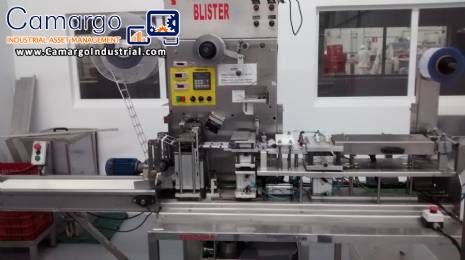
A blister filler is a machine used in the pharmaceutical, food, personal care products and other industries to fill products into blister packaging. Blister packaging consists of a plastic sheet that contains individual cavities or bags where the products are packaged, and a covering layer (usually aluminum or plastic film) that is sealed over the cavities to protect and preserve the products. Here is how a blister filler works:
What is a blister filler for:
Individual Packaging: Blister packaging allows individual packaging of products, such as tablets, capsules, chewing gum, medical devices, supplements, personal care products, among others.
Protection and Sealing: Blister packaging protects products from external factors, such as humidity, light, oxygen and contamination, ensuring their integrity and quality.
Precise Dosing: Individual cavities in blister packs allow for precise dosing of products, making them ideal for products that require exact dosing.
How a blister filling machine works:
Product Feeding: Products such as tablets or capsules are fed into the machine on a conveyor belt.
Cavity Formation: A plastic sheet containing cavities is fed into the machine, and the cavities are shaped to accommodate the products.
Filling: Products are positioned in the cavities of blister packaging, generally by an automated feeding system.
Cover Sealing: A layer of cover (which can be aluminum or plastic film) is hermetically sealed over the cavities, encapsulating the products individually.
Cutting and Separation: Blister packages are cut and separated into individual units, each containing a product.
Quality Control: Individual units are frequently subjected to quality control to verify sealing integrity, product dosage and overall packaging quality.
Final Packaging: The individual units are grouped, packed in boxes or cards and are ready for distribution.
Blister fillers are highly effective in protecting and individually packaging products, ensuring that each unit contains the correct quantity and maintains its quality over time. They are widely used in the pharmaceutical industry, where precise dosing and protection of medicines are essential, but also in other industries where individual packaging of products is necessary. |