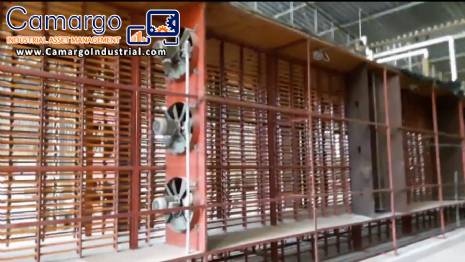
Industrial fresh pasta machines, including those intended for the production of noodles, play a key role in optimizing and scaling the large-scale manufacturing process. Here is information about its usefulness, functioning and types:
Utility:
Large-Scale Production: Industrial fresh dough machines are designed to handle large production volumes, meeting the demands of commercial and industrial establishments.
Efficiency and Consistency: Automate the dough preparation process, providing efficiency, consistency and standardization in the final products.
Variety of Formats: Allows the production of noodles and other pasta formats, meeting specific market needs.
Operation:
The operation of industrial machines for fresh pasta follows a process similar to that of domestic versions, but with characteristics adapted for large-scale production:
Dough Preparation: Ingredients are mixed automatically to form the dough, generally consisting of flour, water and eggs in specific proportions.
Dough Lamination: The dough is fed into the machine, passing through a series of adjustable rollers that gradually flatten it. By adjusting the opening between the rollers, you can control the thickness of the dough.
Cutting the Noodles: After lamination, the dough reaches the desired thickness and is fed into a specific cutting device for noodles. This device is often automated and uses blades or knives to cut the dough into thin strips.
Conveying and Drying System: In some industrial machines, an automated conveying system moves the cut dough to drying areas or other subsequent processes.
Types of Industrial Machines for Noodles:
Drum Machines or Extruders:
They use a rotating drum to extrude the dough, forming different shapes, including noodles.
Suitable for large-scale productions.
Automated Production Lines:
They combine several process steps in a single line, from mixing the ingredients to the final cut.
They can include automatic dosing systems, mixers, laminators and integrated cutters.
Modular Systems:
They allow customization of the production line, adapting to the manufacturer's specific needs.
They can include modules for different processes, such as laminating, cutting and drying.
Computerized Control Machines:
Equipped with advanced control systems to ensure precision and consistency in the production process.
Industries that use industrial machines for noodles:
Pasta and Ready-made Food Industry:
Production of noodles and other fresh pasta for commercial distribution.
Restaurants and Fast Food Chains:
Large establishments serving pasta dishes on a large scale.
Catering Companies:
Attendance at events and large meetings that require significant volumes of food.
Retail Food Suppliers:
Companies that supply fresh pasta products to supermarkets and grocery stores.
Industrial fresh dough machines are designed to deliver efficiency, precision and automation in large-scale production environments. The choice between machine types depends on the specific needs of the industry and the desired scale of production. |





+with+long+pasta+cutter.&c=665-544000&t=2 "Stainless steel ravioli maker with 6 molds for making ravioli (ITALGI brand) with long pasta cutter.")