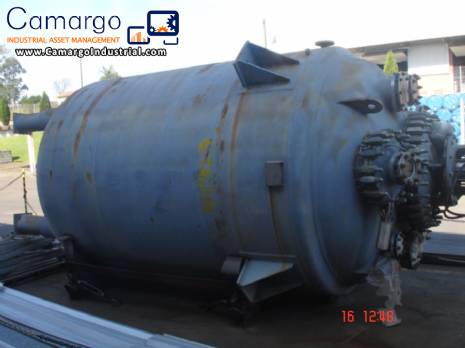
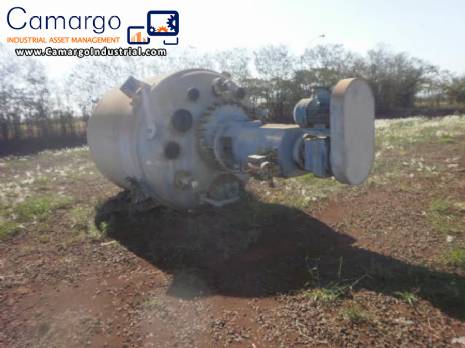
Vitrified Reactors: A vitrified reactor (or enameled reactor) is a piece of process equipment used to carry out chemical reactions, whose internal surface is coated with a layer of vitreous enamel—a type of molten glass bonded to steel. This coating combines the mechanical strength of steel with the chemical resistance and inertia of glass.
The vitreous coating prevents the reactor material (steel) from coming into contact with the reaction mixture, preventing corrosion, contamination, and product degradation.
Vitrified reactors are widely used in processes involving strong acids, bases, organic solvents, and sensitive compounds. Their main applications are distributed across several industrial sectors:
Chemical industry: used in the synthesis of organic intermediates, resins, catalysts, polymers, and dyes, due to the high resistance of the vitreous coating to corrosive substances.
Pharmaceutical industry: used in the production of active ingredients (APIs), antibiotics, vitamins, and hormones, as the coating prevents metal contamination and ensures product purity.
Cosmetics industry: Used in the manufacture of creams, lotions, and fragrances, where the smooth, inert glass surface facilitates cleaning and prevents unwanted reactions.
Food industry: Used in the production of flavors, natural colors, additives, and controlled fermentations, meeting sanitary requirements and preventing metal migration.
Agrochemical industry: Used in the formulation of pesticides, herbicides, and liquid fertilizers, taking advantage of the high chemical resistance and durability of the vitreous material.
Biotechnology: Used in processes involving the cultivation of microorganisms and sensitive enzymes, thanks to the chemical inertness and thermal stability of the vitreous coating. |